Boštjan Napast in an Interview for Jutarnji list on ENNA Group’s Investments
Focus on Logistics and Renewable Energy Sources**
Date publishedDecember 23, 2025
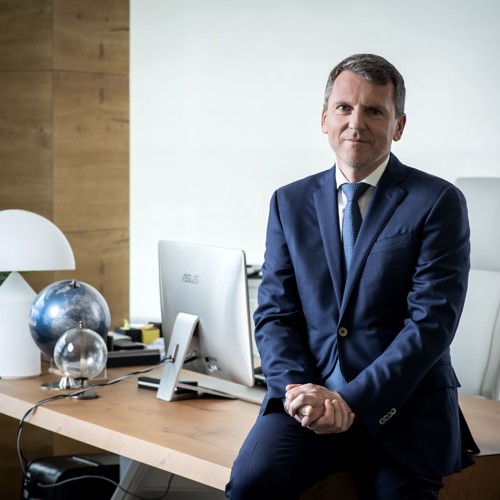
Zagreb, 23 December 2025 – Boštjan Napast, President of the Management Board of ENNA Group, in a major interview for Jutarnji list, presented ENNA’s strategic investments in logistics and energy. He highlighted the exceptional importance of the Rijeka Gateway terminal, spoke about the importance of continuing geothermal power plant projects, and presented investments in solar power plants and energy storage.
Read the interview below:
As we approach the end of the 2025 business year and the review of companies’ business results, is the opening of the Rijeka Gateway terminal in Rijeka the business event of the year for ENNA Group, and how would you assess the significance of the terminal for the group’s business development and goals?
– The opening of the RGW terminal is definitely the event of the year for ENNA Group and will be a very important segment of our business in the future as well. I would say that this terminal is the driver of the future logistics—and indeed economic—development of Rijeka, Primorje-Gorski Kotar County, and the country as a whole. At this moment, the terminal guarantees economic activity, which should almost double in the future. By this I mean all the direct and indirect effects of this project and the potential it brings. Every euro invested in the port generates €1.40 in economic activity and an additional €1.50 in added value, while development generates positive effects throughout the entire supply chain, stimulating growth in sectors such as transport, logistics, trade, and other related industries.
The opening of this terminal has created a great opportunity for development, and we must know how to take advantage of it. At the terminals in the Rijeka basin, 13 to 14 million tonnes of cargo are handled annually, and traffic is expected to very quickly increase to 20 million tonnes. However, for the development of the port, investment in infrastructure is crucial. According to a scenario that assumes the completion of the double-track lowland railway line Zagreb–Rijeka by 2032, Rijeka could by 2040 grow into a true logistics hub of the region and the main gateway for Central and Southeastern Europe. In this scenario, it is estimated that the Port of Rijeka would generate five times more economic activity than today, or €3.3 billion, and 8,600 jobs in the port, related activities, and the wider economy of Primorje-Gorski Kotar County. The Ministry of Transport confirmed a few days ago that 2033 is a realistic deadline for the construction of this railway line. I am an optimist!
It should not be forgotten that goods arriving at the terminal in Rijeka already enter the EU here, which specifically means that customs clearance takes place here, representing direct revenue for the state budget. So far, in the first phase of the terminal, together with our partner APM Terminals, we have invested €210 million. This phase included the construction of the terminal’s basic infrastructure, the procurement of state-of-the-art equipment, and the establishment of the necessary logistics and digital support. The second phase includes an additional investment of €180 million, which should be realized over the next ten years.
During the second phase, the extension of the quay from 400 to 680 meters is planned, which will increase capacity from the current 650,000 to 1,055,000 TEU. We have built the most advanced terminal in this part of Europe—almost fully electrified, sustainable, and green. It should also be noted that in the coming years the terminal will generate the construction of several logistics intermodal terminals in the hinterland and inland. We view the RGW terminal both as a co-owner and as a rail freight operator, and here we expect growth in employment, an expansion of our rolling stock, and an increase in transported volumes. It should be said that we began this process very intensively, preparing for the opening of the terminal with the aim of being fully ready—both in terms of personnel and technology. I am satisfied because we succeeded in this. At the same time, alongside intermodal and container transport, we are also focusing on other types of rail freight transport. We believe that diversification is beneficial here as well.
Read the full interview at jutarnji.hr jutarnji.hr